
The brief for a ‘corporate evening in Provence’ often comes with what appears to be a simple aim: to bring teams together in a memorable setting. Yet behind this request lie very real issues of recognition, team spirit, corporate image and engagement. The venue, the pace, the standard of service and the programme for the evening must all convey the same intention: to create a moment that truly matters.
For senior management, an HR department or a communications team, the challenge is therefore not merely to organise a fine dinner. It is about creating a shared experience that is consistent with the company’s culture, whilst leaving no room for unforeseen events that could undermine the experience. Provence offers an exceptional setting to achieve this, provided one understands its customs, seasons and logistical requirements.
Why organise a corporate event in Provence?
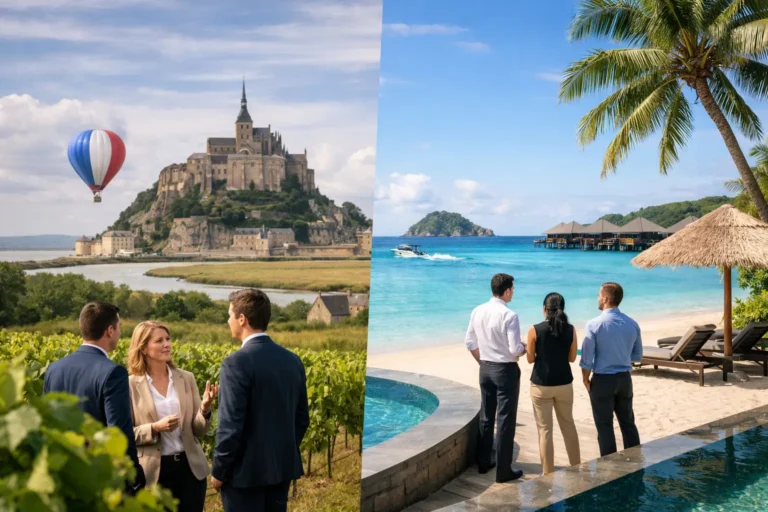
Provence possesses that rare balance between accessibility, a diversity of settings and the art of hospitality. Private country houses, wine estates, boutique hotels, urban rooftops, well-equipped beaches and heritage sites all allow for the creation of very different atmospheres whilst maintaining the essence of a premium experience.
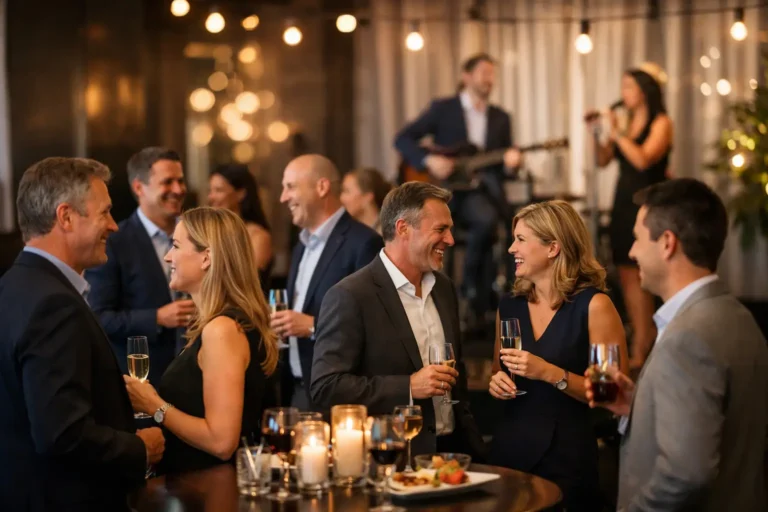
This wealth of options is particularly well-suited to companies wishing to move away from conventional formats. An end-of-year event could take the form of a gala dinner at an estate on the outskirts of Aix-en-Provence. The launch of a new strategy could be celebrated with a contemporary reception in Marseille, featuring a staged speech and discreet musical entertainment. A sales team can be rewarded with a Mediterranean-themed evening in a private venue, where the cuisine and décor serve as expressions of appreciation.
However, the setting alone is not enough to achieve the desired effect. A stunning view cannot make up for a disorganised arrival, inadequate sound equipment or an overly long programme. The value of an event is measured by the smoothness of each guest’s experience, from the moment they receive their invitation right through to their departure.
Start with the objective, not the venue
The choice of venue is often the first question asked. Yet it should actually be the second. Before visiting a venue or selecting a date, it is best to clarify what the event is intended to achieve.
Is it to thank staff after a busy period? To bring together teams from different sites? To host clients or partners in a welcoming setting? To convey a message of transformation to managers? These objectives require neither the same format, nor the same level of formality, nor the same pace.
An evening focused on team-building will prioritise interactions and participatory activities, without over-engineering the entertainment. For a client relations event, the focus will be more on the quality of the welcome, the venue’s ambience, the comfort of conversation and the standard of catering. When a strategic address is central, the technical set-up, the seating arrangement and the order of speakers become priorities.
This scoping phase also helps to set a realistic level of ambition. An event for 40 people in an intimate country house cannot be conceived in the same way as a reception for 300 guests at an event venue. Both can be memorable, provided the format is appropriate for the number of attendees, the budget and the management’s objectives.
The ingredients for an experience that leaves a lasting impression
A venue chosen for its practical suitability
In Provence, aesthetics can easily take precedence over operational constraints. Yet a photogenic venue must also meet the event’s requirements: access for coaches or private hire vehicles, parking, actual capacity, a plan B in case of uncertain weather, toilet facilities, electricity supply, permitted opening hours and accessibility for all participants.
A vineyard may be ideal for a cocktail reception for 80 people, but less suitable for a late-night dance party if there are strict neighbourhood restrictions. A seaside terrace creates an immediate impact, but requires careful planning to account for wind, temperature and alternative arrangements. Local expertise is precisely what is needed to strike a balance between the desire for a particular setting and the conditions that ensure guests’ comfort.
A concept consistent with your corporate culture
Personalisation is not simply about adding a logo to a menu. It is reflected in choices that make the event distinctive: a graphic style, a welcome tailored to the attendees’ profiles, appropriate speaking content, entertainment that respects the group’s maturity, and attention to detail.
For an industrial company, an evening event can showcase expertise and teams through a gallery of portraits, scenic elements or a recognition segment. For a rapidly growing firm, the approach may be more contemporary and dynamic, with rhythmic lighting, lively musical programming and concise segments. Elegance stems from restraint, not excess.
Gastronomy as a hallmark of hospitality
A meal is often the most widely shared memory following a corporate event. In Provence, local produce offers a particularly rich array of ingredients: seasonal plant-based cuisine, Mediterranean fish, aromatic herbs, olive oils and wines from nearby estates. However, the gastronomic aspect must remain at the service of the shared experience.
A sit-down dinner encourages relaxed conversation and is well-suited to structured speeches. A cocktail reception allows for greater movement and facilitates interaction between departments. A hybrid format may be appropriate for large groups, featuring an outdoor welcome, culinary workshops, followed by a more formal central segment. The right choice depends on the time available, the composition of the guests and the level of interaction sought.
Plan logistics in advance to maintain elegance
The perceived quality of an event relies heavily on what the guests do not see. Transport arrangements, set-up timetables, coordination of service providers, dietary requirements, security, permits and contingency planning must all be handled in advance with the same attention to detail as the décor.
The season is a decisive factor. Between May and September, demand for the most sought-after venues is high, and the temperatures make it preferable to spend the early evening outdoors. By contrast, spring and autumn can offer superb light, greater availability and, at times, better budgetary control. In winter, Provence retains great potential, particularly in hotels, heated country houses and heritage sites, provided that the indoor experience is planned with equal care.
For groups travelling from other regions, transfers from railway stations and airports deserve special attention. A poorly coordinated staggered arrival can sap the energy of the event’s launch. Conversely, a well-organised welcome, clear signage and easily identifiable on-site staff immediately establish a sense of trust.
Making the budget a decision-making tool
A well-managed budget does not mean a standardised event. It involves prioritising the areas that will have the greatest impact on the experience. Depending on the project, it may be more appropriate to invest in an exclusive venue and keep the entertainment understated, or to choose a simpler setting in order to prioritise the catering, technical aspects or guests’ mobility.
Items that are often underestimated include transfers, overtime, weather contingency plans, technical constraints specific to certain venues, and venue hire. A transparent budget structure helps avoid last-minute compromises and ensures the expected standard of service is met. It also leaves room for thoughtful touches that make all the difference: a personalised welcome, greenery-based décor, an artistic surprise or a carefully chosen local gift.
The role of a single point of contact
A successful corporate event draws on a range of specialist skills: venue selection, artistic direction, catering, technical support, transport, entertainment and on-site coordination. When these service providers are managed separately, the client often bears part of the coordination burden and the associated risks.
A single point of contact ensures consistency between the initial brief and the execution. They facilitate decision-making, oversee the details, anticipate potential issues and remain available on the day itself so that the in-house teams can fully enjoy the evening with their guests. It is this holistic approach that transforms a series of individual services into a seamlessly managed experience.
At Oleis Travel Events, this approach is underpinned by in-depth knowledge of Provençal destinations and bespoke organisation, from the initial recommendation right through to on-site operational support. The right partner does not merely offer options: they guide the decision-making process, safeguard the project and give precise shape to the company’s vision.
A successful evening is rarely remembered for just one spectacular element. It leaves a lasting impression because everyone felt welcome, valued and naturally at ease. This is where the most meticulous preparation comes into its own: making the experience simple to enjoy, so that it becomes easy to remember.