
A team building event that “went well” is no longer enough. What companies are looking for today is an experience capable of creating a genuine dynamic between teams, breaking down certain barriers and supporting a clear managerial objective. To create a truly unifying team building event, it is therefore essential to go far beyond a pleasant activity or an attractive setting. Success begins with the intention, continues with the design, and depends on the quality of execution.
For a company director, an HR department or an event manager, the challenge is often twofold. The event must offer an engaging experience for participants while meeting a concrete business need: improving collaboration, supporting a new organisation, valuing teams, accompanying change or rebuilding connections after a challenging period. This balance between enjoyment and collective purpose is what gives team building its real strength.
A successful team building event starts with a clear objective
The first instinct is often to look for an activity idea. This is understandable, but it is not the right starting point. A unifying team building event is not just a list of activities. It is a carefully designed experience intended to create a specific effect on a specific group, at a specific moment.
Before choosing a venue, a schedule or a format, it is important to start with a simple diagnosis. Does the team already know each other well, or does it work in silos? Is the need related to cohesion, motivation, onboarding new employees or recognition? Is the goal to revive collective energy or to create a moment of breathing space during a demanding period? Depending on the answers, the format of the event will change significantly.
A very playful activity can be excellent for relaxing a team under pressure, but less suitable if the objective is to bring together departments that rarely communicate. Conversely, a more collaborative and structured format may produce a stronger result, even if it seems less spectacular at first glance. The right choice is not necessarily the one that impresses the most. It is the one that best serves the initial objective.
What truly brings a team together
Team cohesion does not happen automatically just because people are gathered in the same place. Bringing employees together in a beautiful environment is not enough to create a collective spirit. What truly unites a team is the combination of three elements: a shared experience, a balanced level of involvement and a sense of common progress.
The shared experience must allow everyone to live through the same sequence, without reproducing too strongly the hierarchies or habits of everyday work. When a group is placed in a new situation, with different rules and codes, interactions change. More discreet profiles find their place, managers observe differently, and collaboration becomes more spontaneous.
The level of involvement must be carefully measured. An activity that is too passive leaves little lasting impact. An activity that is too exposing can make some participants feel uncomfortable or distant. The key is to create the right conditions so that everyone can contribute without feeling judged or forced. This is often what makes the difference between an event perceived as truly unifying and one seen as simple entertainment.
Common progress gives meaning to the experience. A group that builds, solves, explores, cooks, creates or takes up a challenge together is more likely to remember what it has lived through. The goal is not necessarily performance. It is about a shared journey, with growing engagement and a collective sense of satisfaction at the end.
Choosing the right team building format for your context
There is no universal format. The best team building event depends on the size of the group, the time available, the company culture and the message to be conveyed. This is why personalisation remains essential.
For a small team, an immersive format often works very well. It allows for quality exchanges, a more flexible pace and a deeper relational experience. For a larger group, the organisation must include a smooth structure, well-sequenced moments and flawless logistics to maintain collective energy from beginning to end.
The choice between an indoor, outdoor, solidarity-based, creative, culinary, sports or cultural activity must also be carefully considered. An outdoor format can be highly engaging, provided it is accessible to the group and compatible with the season. A creative activity often encourages expression and cooperation, but requires more subtle framing if the audience is very results-oriented. A dynamic challenge can create momentum, but it should not reinforce competitive logic when the main goal is to bring people closer together.
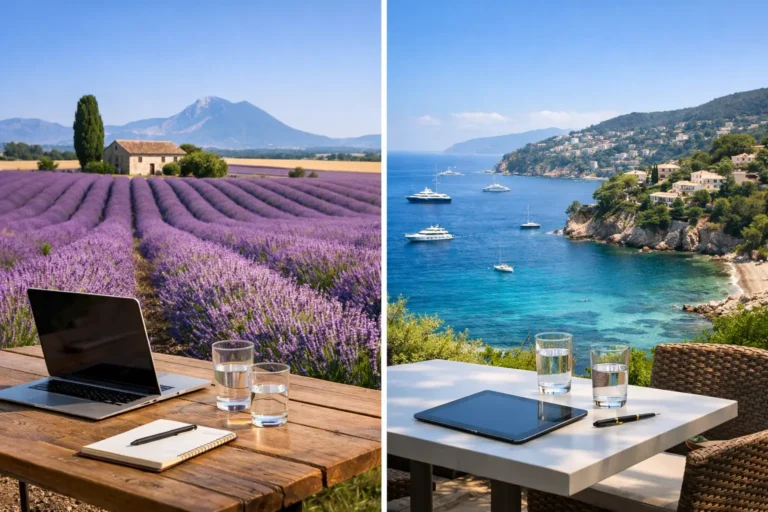
In a destination such as Provence, certain formats take on a special dimension. The setting, the light, the heritage and the Provençal art of living can enrich the experience without distracting from its objective. Once again, the location must not overshadow the collective project. A premium environment should support the impact of the event, not replace it.
The participant experience must be carefully designed
A team building event can be based on an excellent idea and still disappoint if it is poorly managed. Decision-makers know this well: the overall perception of an event often depends on the fluidity of the details. Welcome, rhythm, transitions, quality of facilitation, comfort, timing, level of information and management of unexpected situations all directly influence participant engagement.
To create a truly unifying team building event, the journey must be coherent. The tone set from the invitation matters. If employees understand why they are being brought together, without an overly formal message, they enter the experience more naturally. The on-site introduction is just as important. It must establish a clear framework, value the participants and create a positive energy without feeling artificial.
The quality of facilitation is often underestimated. Yet it is what transforms an activity into a unifying moment. A good facilitator does not simply follow a schedule. They read the group, adjust the rhythm, encourage inclusion and make sure that no one is left aside. In a corporate context, this level of sensitivity makes all the difference.
Finally, the right balance between intensity and breathing space must be preserved. A programme that is too dense can tire participants and dilute attention. A programme that is too loose can cause the dynamic to fade. The elegance of an event often lies in this balance: creating rhythm without rushing, leaving room for informal exchanges without losing the thread.
Common mistakes that prevent team cohesion
Some mistakes come up frequently. The first is choosing an activity simply because it is trendy, without checking whether it suits the group’s culture. What looks appealing on paper is not always what works in practice.
The second is trying to please everyone at all costs. In reality, a team building event does not need to be spectacular for everyone to be successful. It must above all be relevant, well designed and accessible. Trying to tick every individual preference often leads to lukewarm formats with no clear direction.
A third mistake is neglecting what happens afterwards. A unifying event has a stronger impact when it is part of a broader continuity. This can involve a managerial speech, feedback sharing, highlighting key moments or reactivating certain lessons in daily work. Without this follow-up, the experience remains pleasant, but its effect fades more quickly.
Competition must also be handled with care. A well-designed challenge can stimulate a group. But if the format embarrasses less confident participants or reinforces existing tensions, the result can be counterproductive. Bringing people together does not mean erasing differences. It means creating a framework where these differences can coexist in a useful and positive way.
Measuring success beyond smiles
Immediate feedback is an important indicator, but it is not enough. A truly unifying team building event leaves traces in the way teams interact afterwards. Conversations become easier, certain blockages loosen, employees communicate differently, and managers have a more favourable foundation for encouraging cooperation.
To assess the impact, it is useful to return to the initial objective. If the goal was to integrate new employees, did they find their place more quickly? If the aim was to break down silos, did contacts between departments increase? If the event was designed to reward and re-energise teams, did it strengthen the feeling of recognition?
This assessment sometimes requires a little perspective. This is also why support before and after the event is so valuable. An experienced partner does not simply sell an activity. They help define the need, choose the right level of personalisation and secure the conditions for a tangible result. At Oleis Travel Events, this approach is central to the design process: creating an experience as a true lever for cohesion, with the same level of care given to the idea, the setting and the execution.
Creating a truly unifying team building event ultimately means understanding that a successful corporate event does not depend on trends or on the enthusiasm of the moment alone. It relies on a clear intention, an adapted storyline and smooth execution. When these three dimensions are aligned, the group does not simply enjoy a good moment. It leaves with something stronger to build together.