
How to choose between a corporate seminar on the French Riviera and another one in Provence ?
An executive committee is looking for a peaceful setting to make strategic decisions. A sales team is hoping for energy, a lively atmosphere and an evening they’ll never forget. In both cases, choosing between Provence and the Côte d’Azur for a seminar is not simply a matter of landscape preference. The destination influences participants’ availability, the nature of discussions, the programme and, ultimately, the impact of the event.
Provence and the Côte d’Azur both offer a strong Mediterranean appeal, easy access and high-quality accommodation. However, they do not provide the same collective experience. The right choice depends on your managerial objective, the season, the profile of your teams and the level of service expected.
Provence or the Côte d’Azur for a seminar: start with the objective
The first question is not ‘where are we going?’, but ‘what do we want to achieve?’. A working seminar, a start-of-year event, a conference, a rewards event or a team-building programme do not all call for the same setting or the same pace.
Provence is particularly well-suited when a company wishes to create a break that encourages taking a step back. Country houses, wine estates, boutique hotels, charming villages and open countryside provide a less formal setting, without compromising on standards. This pace is ideal for senior management teams, transformational seminars, strategic meetings or groups that need to truly reconnect. The setting encourages more direct conversations, far removed from the usual distractions.
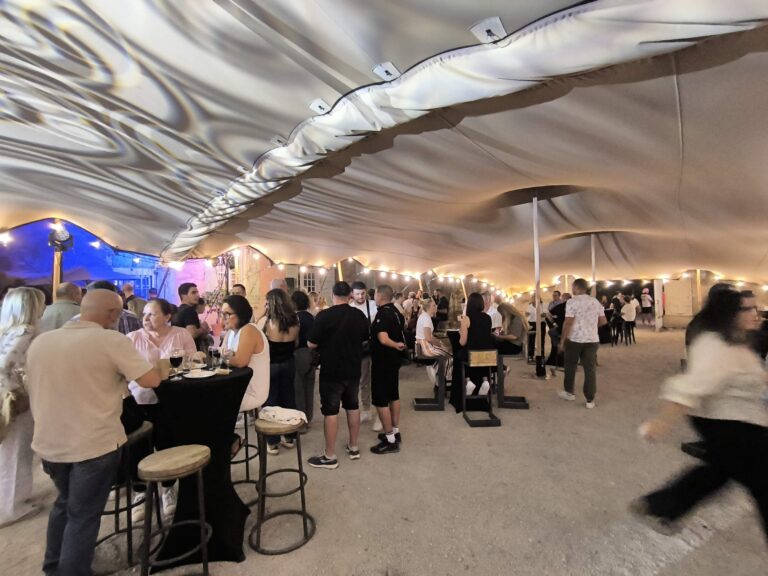
The Côte d’Azur is the obvious choice when the event needs to convey a sense of prestige, energy or celebration. Nice, Cannes, Antibes, Monaco and the nearby hinterland offer a remarkable concentration of luxury hotels, event venues and evening entertainment options. For a sales convention, a client incentive, a product launch or an awards ceremony, this vibrancy can reinforce the company’s message.
There is no hierarchy between the two. It is a matter of finding the right balance between the ambition of your event and the impression you wish to leave on participants.
Provence: creating the conditions for lasting cohesion
A seminar in Provence works well when the aim is to slow things down just enough to get teams moving again. Far from being passive, this atmosphere allows for the creation of engaging formats: small-group workshops, culinary experiences, orienteering challenges, activities centred on heritage or time for reflection on a privately hired estate.
For groups of 10 to 80 people, Provence offers a high degree of customisation. A stately home can accommodate a small, close-knit team in a private setting. A country house or country hotel allows you to alternate between meetings, meals and activities without constant travel. This logistical continuity is invaluable: it maintains focus and facilitates informal exchanges, which are often the most beneficial for team cohesion.
For larger groups, the choice of venue must be carefully considered. Some estates are appealing for their character but have more limited room or meeting space capacity. A balance must then be struck between the charm of a unique site, accommodation spread across several establishments, or a location in a well-equipped Provençal city such as Aix-en-Provence, Avignon or Marseille. A successful programme does not rely solely on a remarkable location: it depends on the smooth flow of the itinerary, working hours and shared moments.
When Provence is the best choice
It is often the most suitable destination for an executive seminar, a back-to-work meeting, an HR programme centred on corporate culture or a team-building event where authenticity matters more than spectacle. It is also ideal for organisations seeking to promote a responsible approach: proximity to local producers, seasonal cuisine, low-impact activities and venues deeply rooted in their local area lend meaning to the event without turning it into a mere speech.
In high season, however, tourist numbers and the heat require meticulous preparation. Outdoor activities can be scheduled early in the morning or late in the day, with a proper fallback plan in place. Spring and autumn often offer the best balance between comfort, availability and budget.
The French Riviera: adding scale to the event
The French Riviera meets another requirement: that of a high-profile, dynamic and instantly rewarding event. Its main advantage lies in the breadth of its offering. Extensive hotel accommodation, flexible meeting spaces, rooftop venues, private beaches and restaurants suitable for groups make it possible to organise ambitious events, particularly for 100 to 500 participants.
This destination is particularly well-suited to conferences bringing together professionals from various sectors, events featuring on-stage presentations, or programmes involving international guests. Air and rail links, particularly around Nice, make it easier for delegations from different regions or countries to travel to the venue. For a tight two-day schedule, this accessibility can make a real difference to attendance levels and team fatigue.
The French Riviera is not merely a glamorous fantasy. It can also host a demanding business seminar, provided the right setting is chosen. A seaside venue will not have the same effect as a location in the hinterland of Nice or Grasse. The former fosters a sense of reward and visibility; the latter offers greater tranquillity, whilst maintaining a high standard of service.
Key considerations on the French Riviera
The standard of service and high demand can put a strain on the budget, particularly during conferences, festivals and the summer months. Planning well in advance is essential, as is checking traffic restrictions, transfer times and the actual availability of venues. A venue located just a few kilometres away may take considerably longer to reach, depending on the time of year.
Success also depends on ensuring the format and setting are well-matched. An overly packed programme in an already bustling destination leaves little room for spontaneous encounters. Allowing for breaks, limiting transfers and ensuring a warm welcome on arrival helps transform a beautiful destination into a truly seamless experience.
Budget, season and group size: the deciding factors
For the same budget, Provence and the Côte d’Azur do not always offer the same standards or the same periods of availability. Provence often offers greater flexibility when it comes to intimate settings, private hire and local experiences. The Côte d’Azur makes it easier to organise large-scale facilities and highly structured event services.
The season also shapes how the project is approached. From September to November, both destinations are particularly attractive: there is still plenty of light, temperatures are pleasant, and staff are back in a professional rhythm conducive to collective engagement. Between December and February, the towns of the Côte d’Azur may be easier to consider for a short seminar, whilst Provence is better suited to groups seeking a more cosy and welcoming atmosphere.
Finally, the number of participants must guide the planning from the outset. For 15 people, exclusive use of a venue and the quality of the working sessions take precedence. For 300 people, managing the flow of people, catering capacity, technical facilities, plenary sessions and contingency plans become crucial. In both cases, the perceived experience depends less on the prestige on display than on the precision of execution.
Designing an experience rather than booking a destination
Choosing between Provence and the Côte d’Azur becomes simpler when you plan the entire stay as a cohesive whole. What message should set the tone for the seminar? When will participants have the chance to interact in a different way? At what point should you create an element of surprise, followed by a meaningful discussion? These questions provide concrete guidance for choosing the venue, activities and pace.
A single point of contact capable of managing accommodation, catering, transport, entertainment, technical support and on-site coordination ensures this coherence. At Oleis Travel Events, the destination is never viewed as merely a backdrop: it becomes a tool to serve a business objective, with constant attention paid to the details that ensure the stay runs smoothly for both organisers and participants.
Before making your final decision, summarise in a single sentence the desired outcome once everyone returns: better-aligned teams, a revitalised sales drive, recognised staff, or a shared vision. This sentence will naturally indicate whether your next seminar should embrace the laid-back pace of Provence or the vibrant energy of the Côte d’Azur.